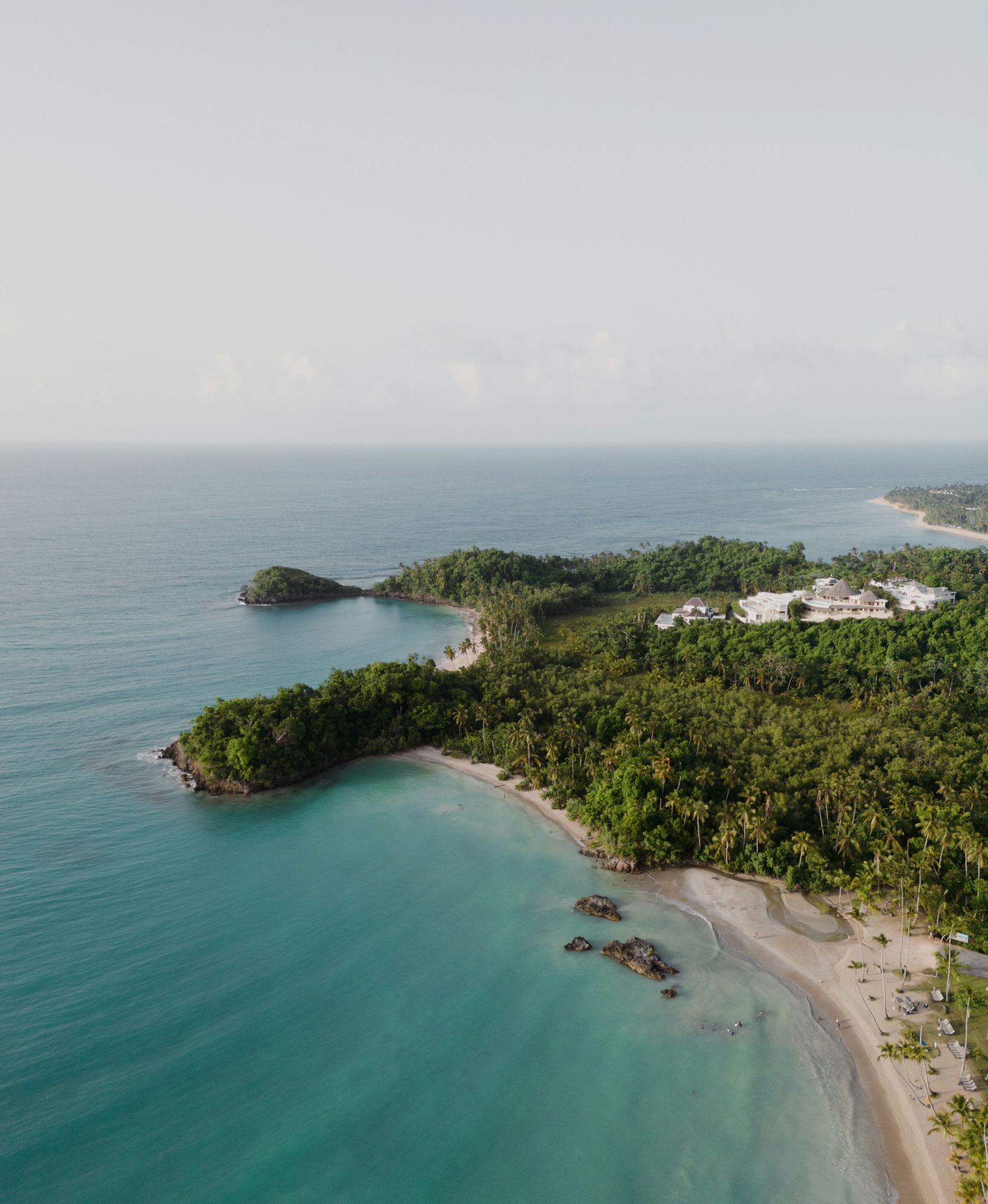
Choose Punta Cana for an all-inclusive stay with no logistics at all and plenty of direct flights. Choose Las Terrenas for a real village, unspoiled beaches, independent restaurants and spectacular nature. Both are in the same country, about four hours apart by road, but they are two very different trips. We know both: several family stays at all-inclusives in Punta Cana, then our villa in Las Terrenas. So we are not neutral, and we might as well say so up front. That is exactly why we also tell you when Punta Cana is the better choice, with numbers to back it up.
The short answer: which one should you choose?
| You are looking for | Our answer |
|---|---|
| Everything included, nothing to organize | Punta Cana |
| The most direct flights, year-round | Punta Cana |
| Kids' clubs, water parks, golf, big nightlife | Punta Cana |
| A real village, on foot, with its independent restaurants | Las Terrenas |
| Discovering Dominican culture | Las Terrenas |
| Peace and quiet, with no crowds around you | Las Terrenas |
| Unspoiled beaches, with little construction | Las Terrenas |
| Whales, waterfalls and mountains close at hand | Las Terrenas |
| A private villa, at your own pace | Las Terrenas |
Why did we choose Las Terrenas over Punta Cana?
We are not talking about Punta Cana from hearsay: we went several times as a family, always at all-inclusives, never in a villa. For years, that was our style of vacation, and it was great. Then the way we travel changed, and we realized we liked all-inclusives less and less, because you discover less of the place you are in.
Here is what we noticed, and it is our opinion, not the truth. At an all-inclusive, it often feels as if the goal is to make the stay resemble the United States or Canada, when you are in another country, with a culture that deserves to be discovered. And when we stepped outside the hotel, we did not find a beautiful downtown to stroll through, or much to do nearby. During our last stay, at Christmas, we told ourselves we could not see ourselves living there: it is mostly big resorts, and people stay inside their all-inclusive.
As for Las Terrenas, we had been hearing good things about it in the family for several years: a little paradise, not too touristy yet, beautiful beaches that are easy to reach, a pleasant town, not dangerous. We went to see for ourselves, and it was all true. Above all, the people are so kind. A town, an atmosphere, restaurants, different beaches every day: it almost feels like another country.
For us, the choice is made: we love Las Terrenas a thousand times more, and we will not go back to Punta Cana. But it comes down to travel style. If you want your meals, the cleaning and everything else done for you, an all-inclusive remains the best choice, and millions of travelers have excellent vacations there.
Punta Cana and Las Terrenas by the numbers
To understand the difference, start with scale. The province where Punta Cana is located has about 17 times more hotel rooms than Samaná province, and its airport handles more than 100 times more passengers. These are not the same type of destination.
| Punta Cana | Las Terrenas and Samaná | |
|---|---|---|
| Hotel rooms | 54,962 (La Altagracia province) | 3,134 (Samaná province) |
| Hotel occupancy rate | 78.6% | 58.2% |
| Airport passengers in 2025 | 11.3 million | Fewer than 100,000 (El Catey) |
| Rain per year | 1,159 mm | 2,167 mm |
| Main type of stay | Big all-inclusive resorts | Small hotels, villas, independent restaurants |
Sources: Dominican Tourism Intelligence System (Situr, via Acento, May 2026), National Statistics Office (2025 yearbook), NOAA 1991 to 2020 normals for rainfall (Punta Cana airport and the Arroyo Barril station, on the Samaná Bay side, about 15 km from Las Terrenas).
What is the difference in atmosphere?
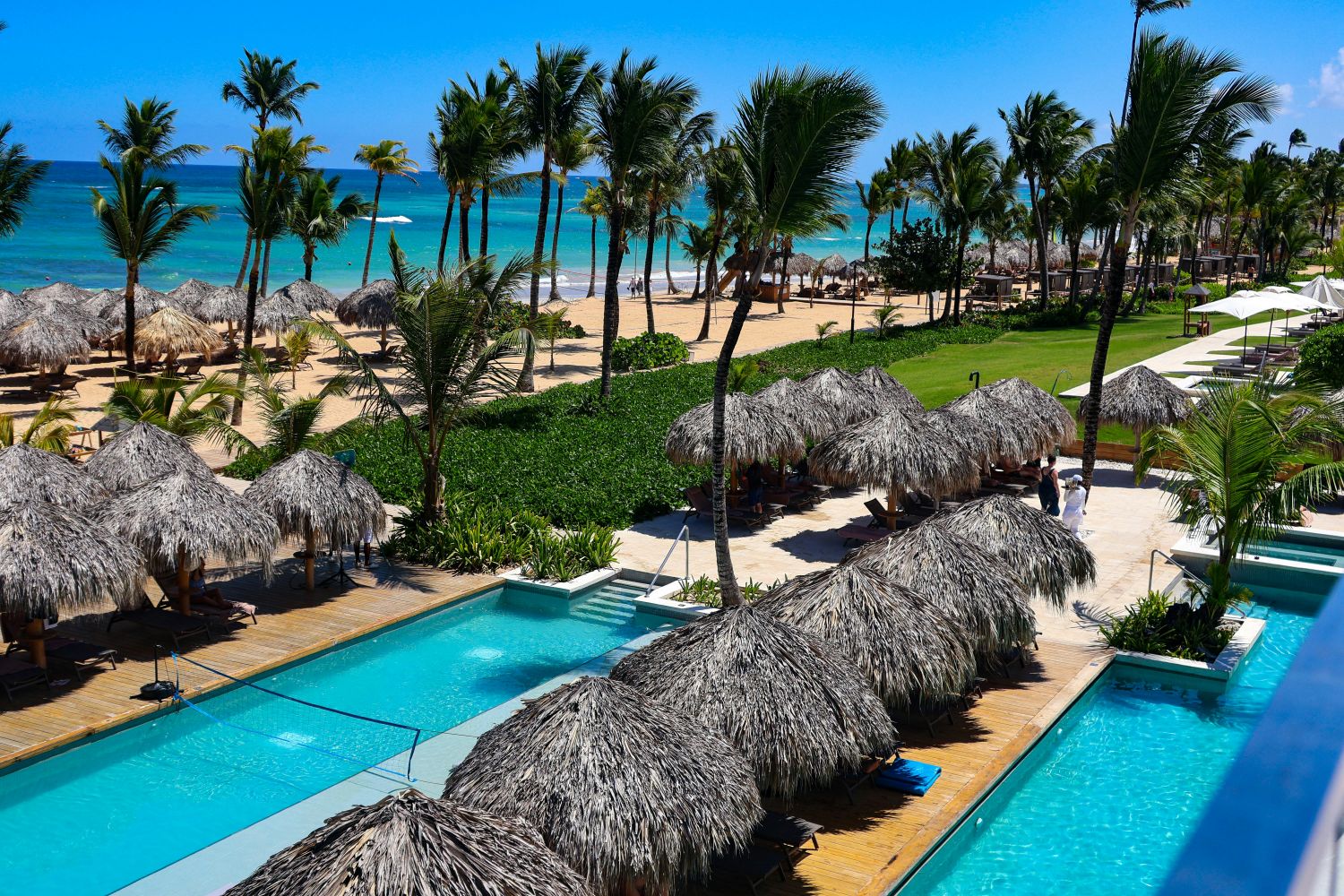
Punta Cana is not a town in the classic sense: it is a tourist district, created in 2006, that includes Bávaro, Cap Cana, Uvero Alto and Arena Gorda. People come mainly for the big beachfront resorts, where everything is taken care of: meals, drinks, entertainment, pools, kids' activities. You drop your bags and you do not have a single decision left to make. For many people, after a busy year, that is exactly what they need, and it is done very well.
Las Terrenas is the opposite: a fishing village turned small cosmopolitan town, with an international community settled here for decades (French, Italians, Canadians and more). You head out on foot in the evening, try a different restaurant every day, buy your fruit at the market and run into the same faces. You do have to plan your days a bit more: that is the price of freedom and, for us, it is the whole pleasure of it.
Which has the most beautiful beaches?
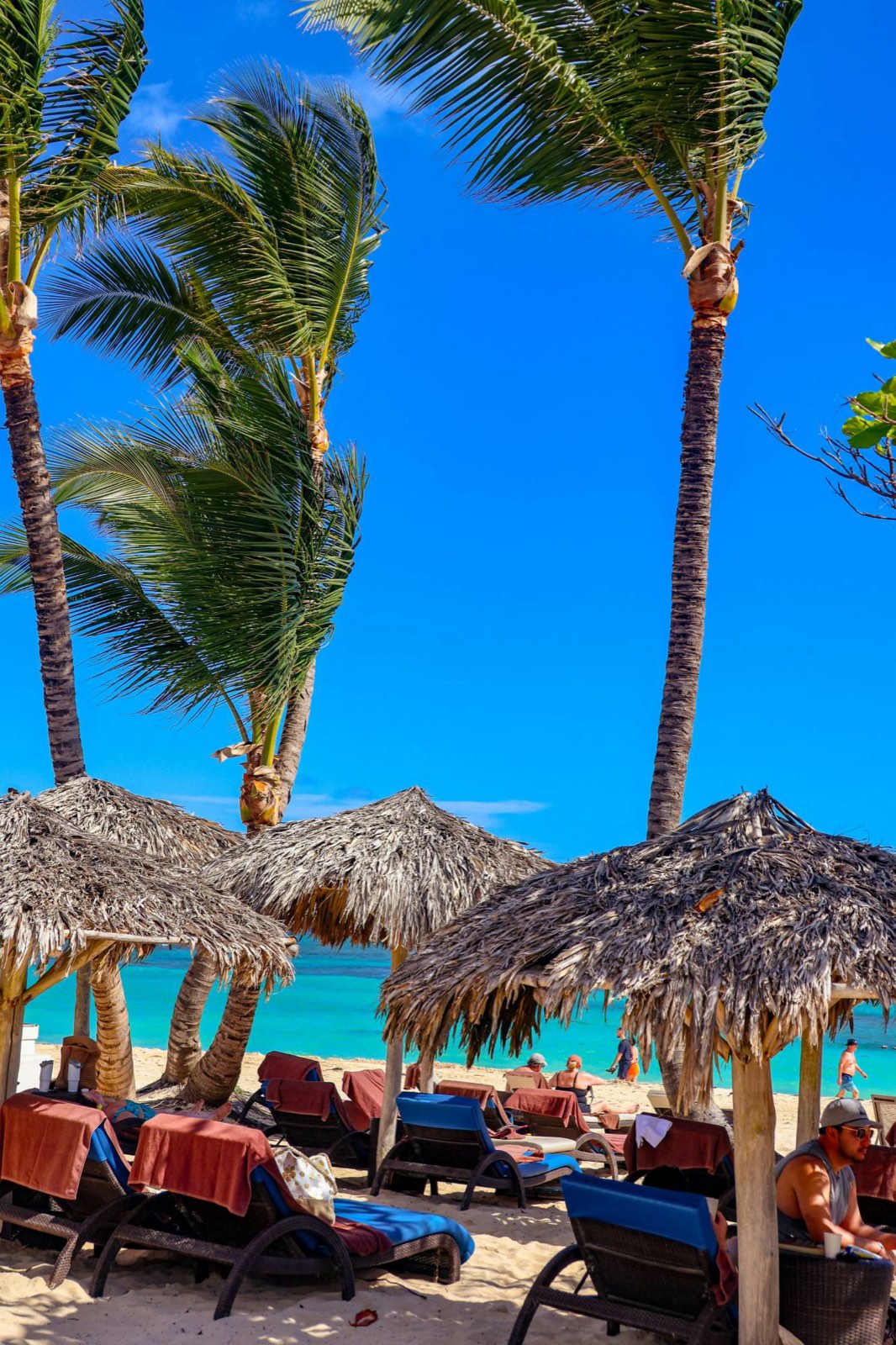
Let's start with what the rankings say, and they favor Punta Cana: more than 50 km of white sand, a sea often described as calm thanks to the reef (except at Macao, the surfers' beach), several Blue Flag beaches, and Bávaro, ranked the world's 7th best beach by Tripadvisor in 2025. That is a real strength, and not one to play down.
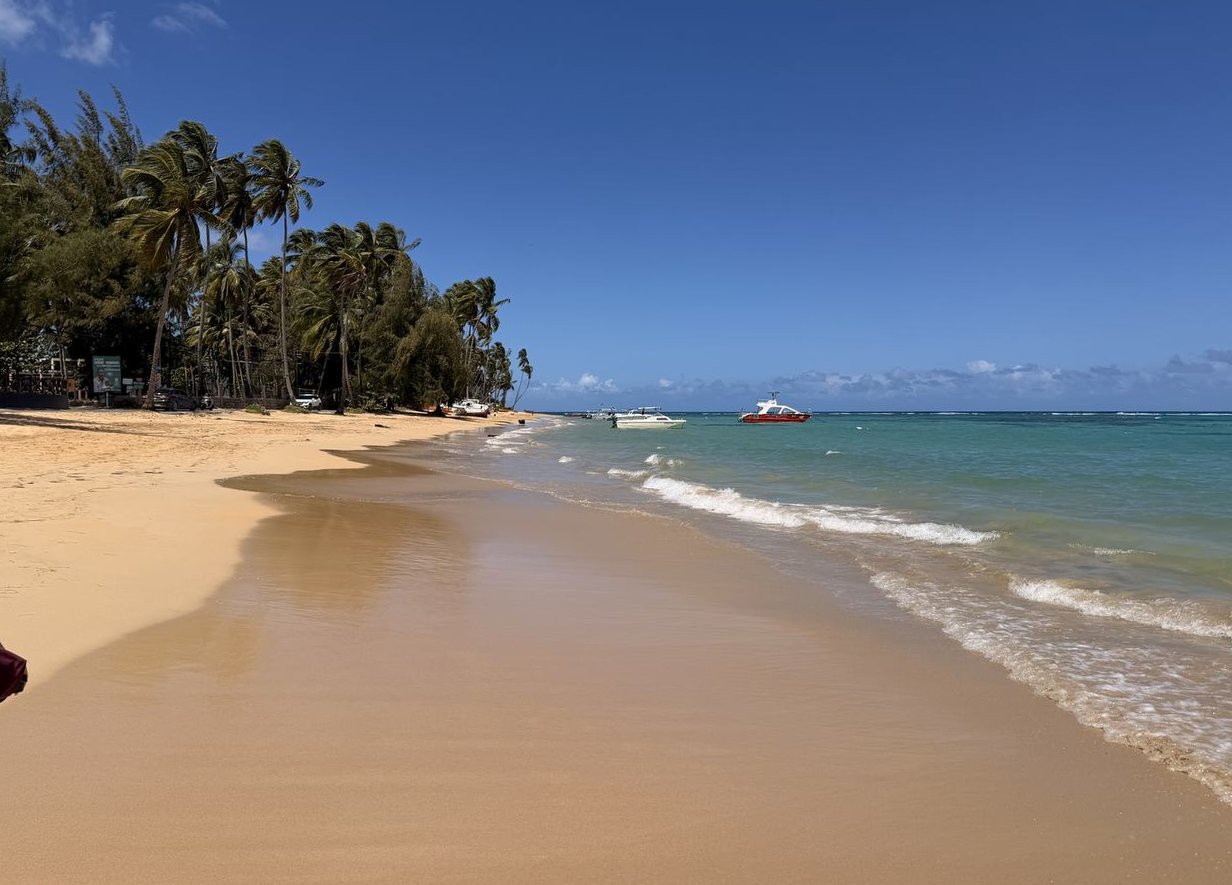
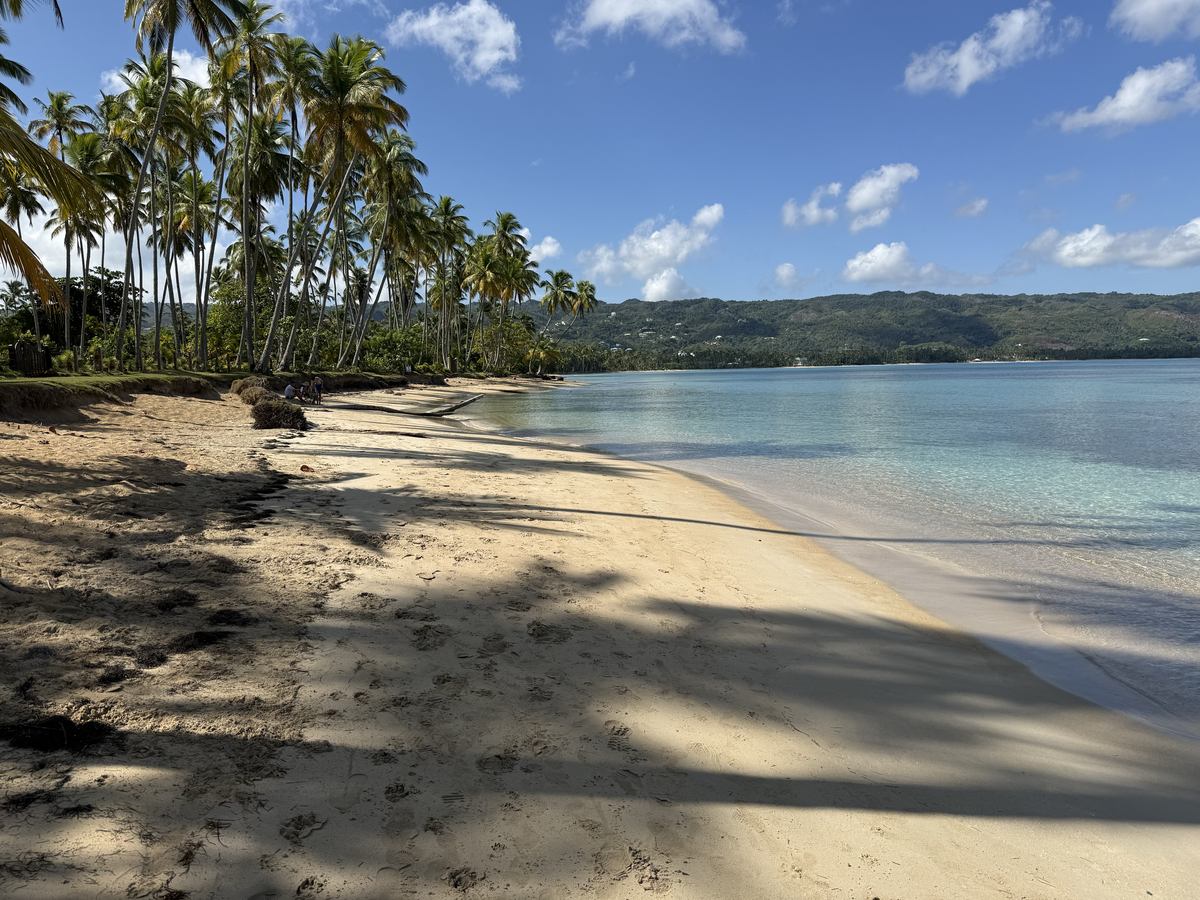
But having known both, our bias is clear: we much prefer the beaches of Las Terrenas. We find the water bluer and the sand more beautiful, and during our stays, in March and in summer, we had fewer waves than on the beaches of our hotels in Punta Cana. Above all, at Playa Cosón, you look left and right: no big resorts, no crowds, just kilometers of sand and coconut palms. For peace of mind, there is no comparison.
And you can try a different one every day: Morón and Jackson take some effort to reach, Bonita is a postcard, Las Ballenas and Punta Popy are the village beaches. One honest caveat: on this coast, the waves often build in the afternoon in winter, so it is better to swim in the morning. It is all described in our field notes on the beaches.
In the Dominican Republic, beaches are public, including in front of hotels. But nothing requires a hotel to let you cross its property: in Punta Cana, in practice, your beach is often your resort's beach. That is what we experienced there: we only ever tried the one at our hotel.
Where does it rain less?
In Punta Cana: about 1,160 mm of rain a year (46 inches), against nearly 2,170 mm (85 inches) on the Samaná side, according to the same US normals. That is what makes the peninsula so green. But do not let these numbers scare you: in the tropics, rain mostly falls in showers. In Las Terrenas, we only had a few scattered showers in March, and in three weeks in summer, not one full day of rain. The gap is small in February and June, and larger from late summer to late fall.
| Month | Punta Cana | Samaná (Arroyo Barril) |
|---|---|---|
| January | 85 | 143 |
| February | 63 | 95 |
| March | 50 | 108 |
| April | 65 | 142 |
| May | 129 | 207 |
| June | 94 | 133 |
| July | 85 | 183 |
| August | 107 | 229 |
| September | 135 | 233 |
| October | 124 | 240 |
| November | 131 | 272 |
| December | 91 | 182 |
As for temperature, the two are about equal, with a sea around 26 to 29 °C (79 to 84 °F). All the details are in When is the best time to visit Las Terrenas?
Where is there more sargassum?
Sargassum, the brown seaweed that washes up on beaches, affects the whole country unevenly. Punta Cana and Bávaro account for some of the heaviest accumulations. In return, the hotels clear it every day with crews and machines; it is mostly certain public stretches that keep it longer.
In Las Terrenas, our experience is simple: during our stays, in March and in summer, we never saw any sargassum, at Playa Cosón or on the other beaches. That does not guarantee anything for your stay: no official measurement compares the two destinations, and arrivals change from one week to the next. Before you leave, check the monitoring maps: they show a regional trend, without predicting what will arrive on a specific beach.
Which one is safer?
Neither Canada nor France ranks one above the other. Canada asks travelers to exercise a high degree of caution throughout the country, with no regional distinction. France places the whole country under reinforced vigilance and names, among the tourist areas affected by crime, both Bávaro and Punta Cana (notably around the all-inclusive hotels) and the Samaná Peninsula (notably Las Terrenas).
The difference lies elsewhere. At a big resort, the environment is controlled, although Canada points out that thefts and assaults happen there too. In Las Terrenas, you live out in the open, as in any town: the same common-sense habits, and one strict rule about main roads at night. Over more than a month in total on site, as a family, we have never had a moment of worry there. We explain everything in our safety guide.
Hurricanes, for their part, affect both: in 2022, Fiona made landfall near Punta Cana, then continued on toward Samaná.
Which one is cheaper?
Beware of ready-made answers: neither one is systematically cheaper. It all depends on your group and your habits.
An all-inclusive is paid per person: for two people, the budget is simple and known in advance, especially if you eat and drink a lot on site, and there are plenty of good deals thanks to competition between hotels. A villa is paid for the whole house: with six or eight people, family or friends, the math changes completely, and you choose what you spend on restaurants and outings. The best advice: compare the total cost for your dates, flights and transfers included.
What can you do in Punta Cana and Las Terrenas?
| Punta Cana | Las Terrenas and Samaná |
|---|---|
| Saona Island by catamaran: full day, US$49 to 125 | Playa Jackson by boat: US$65 for snorkelers |
| Hoyo Azul and Scape Park: about US$130 | El Limón waterfall: on horseback or on foot |
| Golf: Corales, which hosts a PGA Tour event, and Punta Espada | Humpback whales, January 15 to March 31: US$65 from Samaná |
| Coco Bongo and the nightlife: about US$90 to 110 | Coffee and cacao route by ATV |
| Hotel water parks and kids' clubs | Los Haitises National Park, surfing, kitesurfing, freediving |
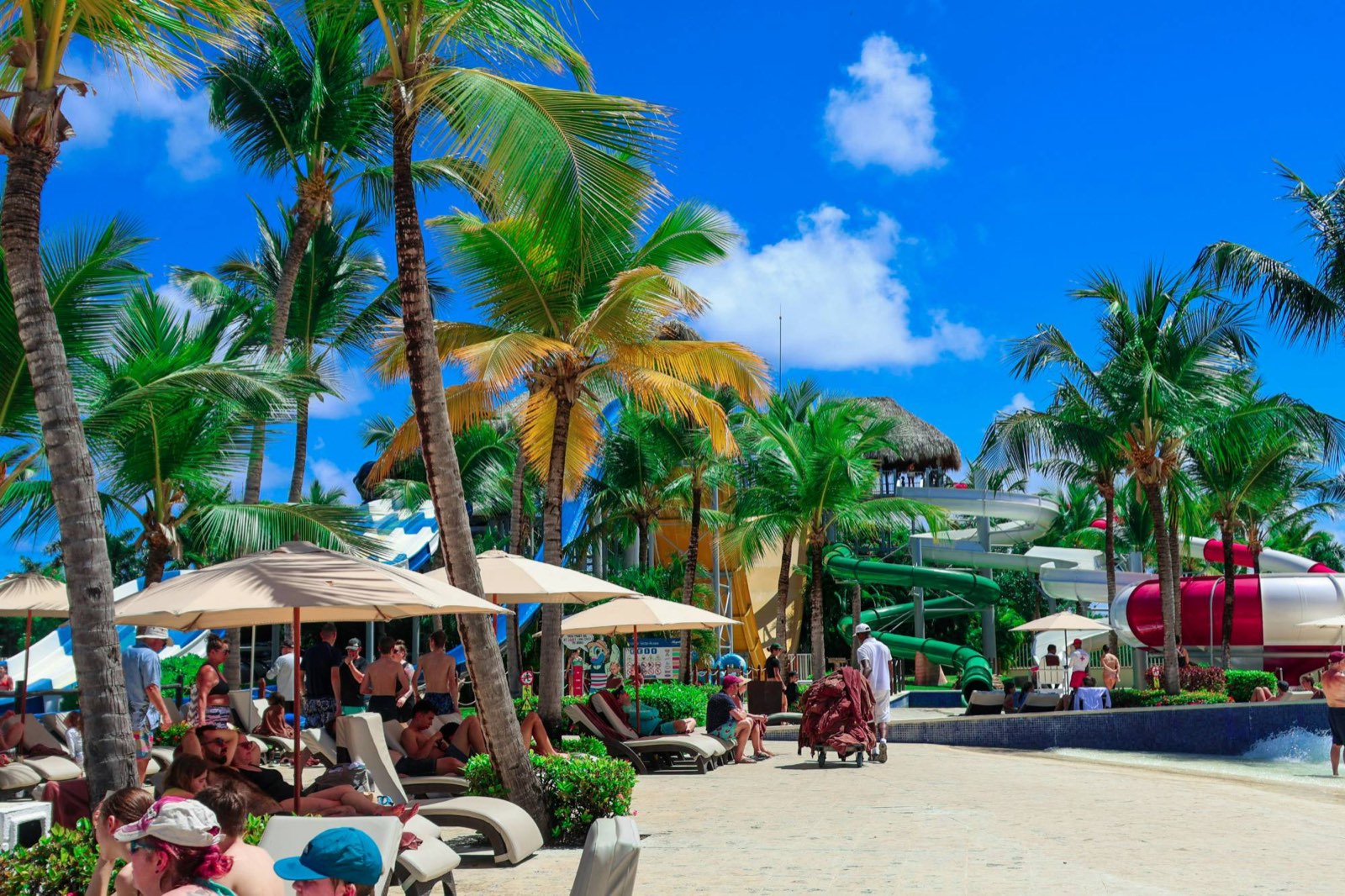
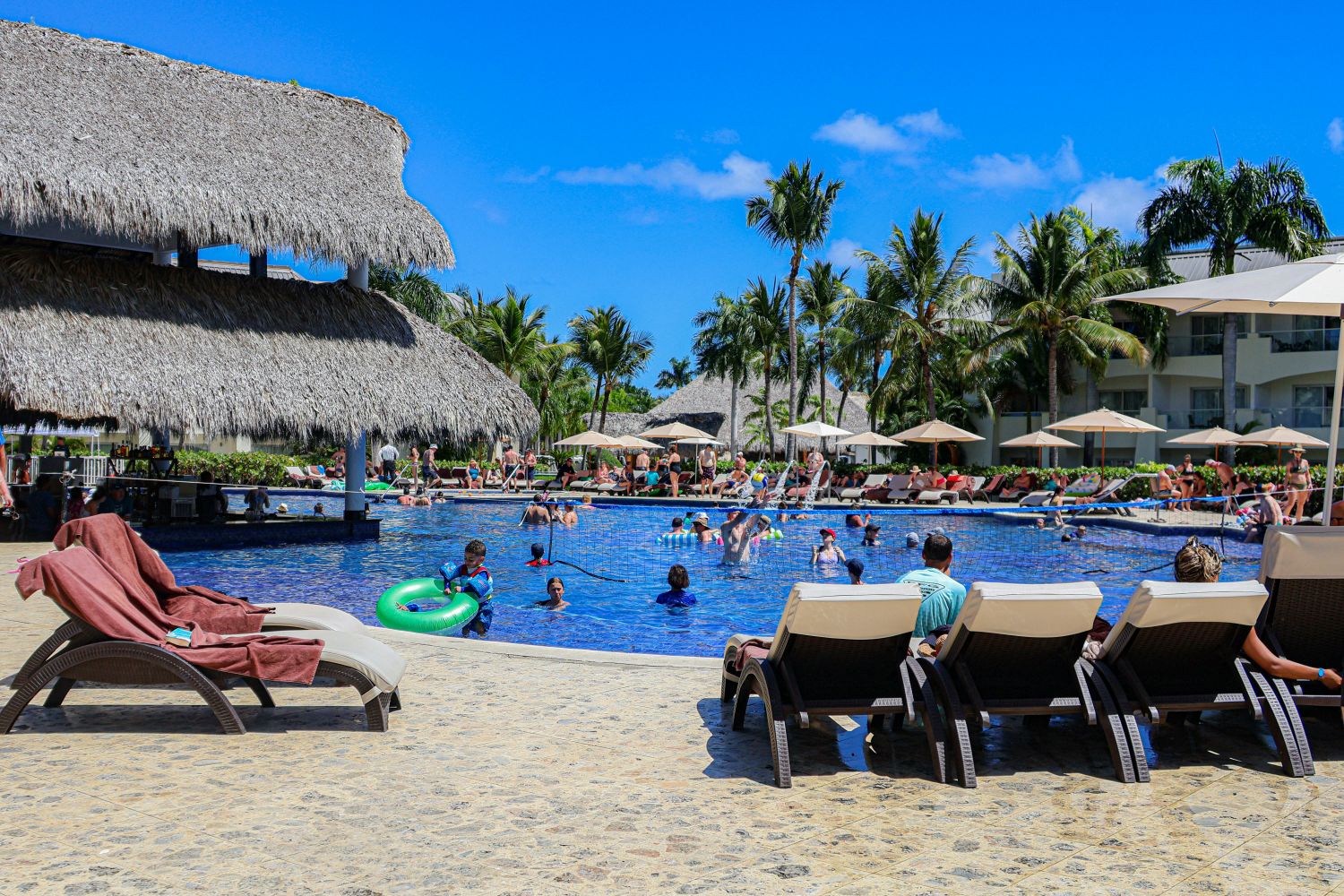
For golf, partying and kids who want a water slide a day, Punta Cana wins hands down. For nature, it is Samaná: the whales are in its bay, and the waterfall and the mountains are right on the doorstep. Our outings are detailed in Things to do in Las Terrenas.
Can you see Samaná on a day trip from Punta Cana?
Yes, but it is not Las Terrenas you will see. The classic excursion takes you to Miches or Sabana de la Mar, then crosses the bay by catamaran for 40 to 50 minutes, for Cayo Levantado, the El Limón waterfall and, in season, the whales. Plan on 10 to 14 hours in total and about US$160 to 225 per adult depending on the package. From mid-January to the end of March, it can be worth it for the whales if you are already in Punta Cana, but it is a very long day with young children.
How long does it take to get from Punta Cana to Las Terrenas?
About 4 hours by road without stopping, for 266 to 315 km (about 165 to 195 miles) depending on the source; allow more like 4.5 to 5 hours with a break. You head toward Santo Domingo, then take the Samaná highway, with several tolls. We found no scheduled flights between the two. An important note: we have never driven this road ourselves, and these times come from online route planners.
By private transfer, HugXander charges US$270 one way for up to 5 people, and US$330 for 6 to 8 (2026 rates). The bus is possible, but it takes more than 6 hours. So if you are headed to Las Terrenas, landing in Punta Cana only makes sense for a really good deal: El Catey airport is 25 minutes from the villa, and Santo Domingo is two to two and a half hours away. All the options are in our guide to getting to Las Terrenas.
Can you combine the two?
Yes, and it is one way to see two sides of the country, if you have at least ten days. We have not done it ourselves, but here is how we would go about it: start with a few days of rest in Punta Cana, drive during the day, then finish in Las Terrenas for nature and village life. When possible, book a return flight from El Catey or Santo Domingo so you do not have to drive the road again. Avoid doing the round trip in one day, and do not drive on main roads at night.
Our verdict: who is each one for?
Choose Punta Cana if: you really want to switch off without organizing anything, you are going for a week or less, you are traveling with young children who love kids' clubs and water slides, you enjoy golf or nightlife, or you need a direct flight outside of winter.
Choose Las Terrenas if: you want to immerse yourself in Dominican culture, feel the atmosphere of a town, try lots of restaurants and a different beach every day, see whales or a waterfall, or if you are traveling as a group of six or eight and dream of a house all to yourselves.